
can sciatica cause groin pain
Can Sciatica Cause Groin Pain? How to Choose the Right Next Step
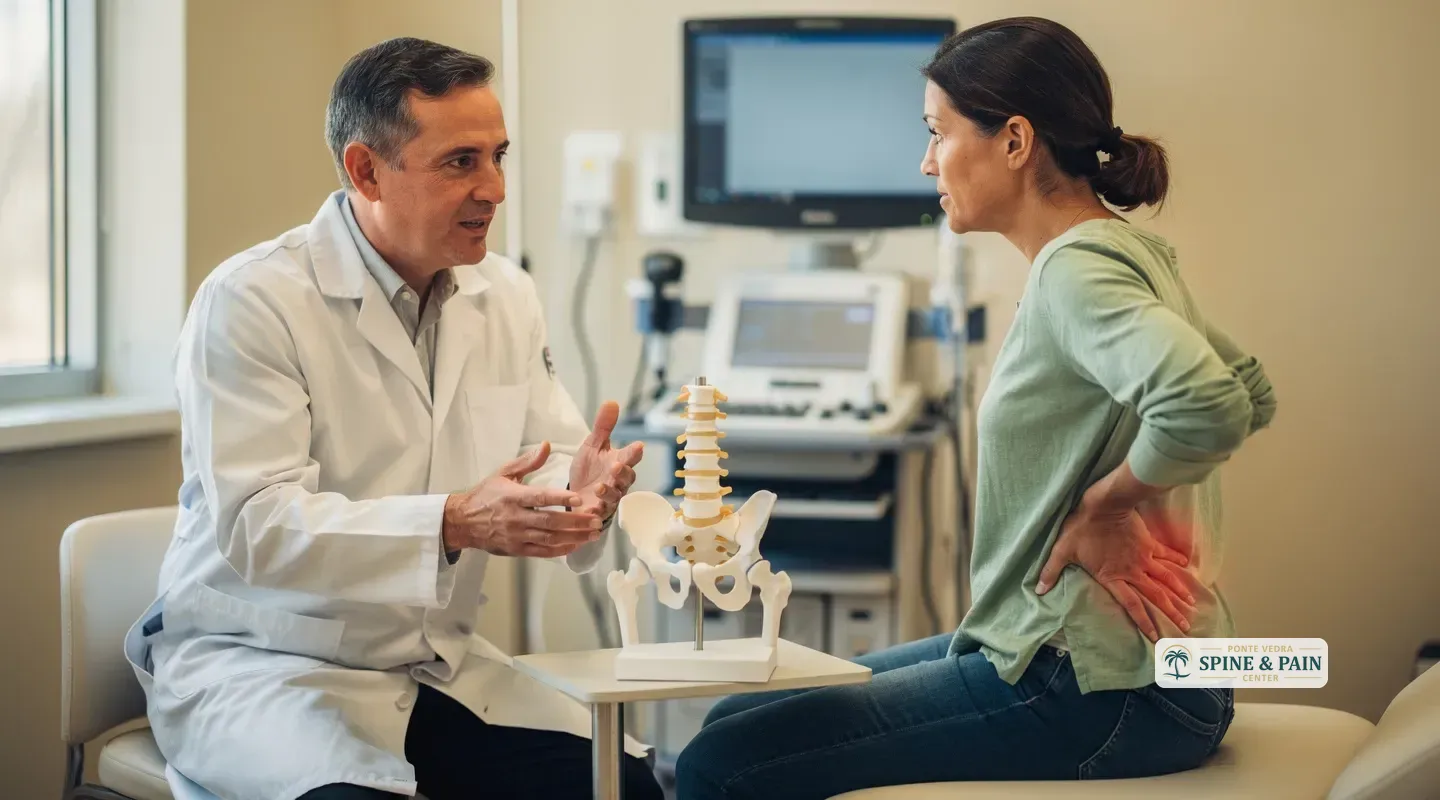
Can sciatica cause groin pain?
Sciatica can cause groin pain, but groin pain is less common than lower-back or leg pain. Groin-dominant pain may come from an upper-lumbar nerve problem rather than direct pain from the sciatic nerve. Hip problems, nearby muscles, and hernias are also possible sources, so the symptom’s location cannot establish the cause by itself.
Classic sciatica usually follows the sciatic nerve into the leg, while an upper-lumbar nerve problem can affect the groin, hip, or front of the thigh. Sources use the word “sciatica” differently in this setting, but the practical point is consistent: groin pain labeled as sciatica deserves a clinical examination rather than self-diagnosis.
A symptom pattern gives you a better starting point than a label. Notice where the pain begins, where it travels, whether numbness or weakness appears, and whether movement changes it. Use those details to decide how quickly you need help, while treating sudden or concerning changes as an escalation issue rather than waiting for the pattern to become clearer.
What does typical sciatica feel like?
Typical sciatica usually feels sharp, burning, electric, shooting, stabbing, or shock-like. The pain commonly starts in the lower back or buttock and travels down the back of one leg, often below the knee. Tingling, numbness, or weakness may occur in the calf or foot.
Lumbar nerve-root pain can also produce burning, prickling, or other abnormal sensations. These descriptions can help you explain what you feel, but they do not identify the affected structure without an examination.
Classic sciatica is usually one-sided and may worsen with sitting, coughing, or bending. Pain limited to the groin, pain limited to the knee, or pain affecting both legs often has another explanation and deserves a clinical check. Back pain alone isn’t sciatica.
A one-sided route from the buttock into the leg is therefore more typical of classic sciatica than pain centered in the groin. A groin symptom can still occur alongside a back or nerve problem, but its presence should broaden the question rather than settle it.
The cited NHS guidance says sciatica usually improves within 4 to 6 weeks and that staying active shortens recovery compared with bed rest. That guidance is cited from United Kingdom sources and does not replace an assessment when your symptoms are severe, worsening, associated with weakness, or disrupting daily activities.
How can a lumbar nerve problem reach the groin?
Upper-lumbar radiculopathy can affect the L1-L3 nerve roots and cause pain in the groin, hip, or front of the thigh. Radiculopathy means irritation or compression involving a spinal nerve root. That pattern is radiculopathy, not true sciatica in the strict sense used by sources that reserve “sciatica” for pain along the sciatic nerve.
L1-L3 nerve-root compression can cause pain and numbness in the upper thigh and groin, while lower nerve-root compression affects different parts of the leg and foot. The location of symptoms reflects the nerve fibers involved, but location alone still cannot tell you whether a disc, joint, muscle, or another condition is responsible.
Lumbar radicular pain can travel from the lower back to the buttock, groin, or leg on one or both sides, depending on the affected nerve fibers. This broader pattern explains why groin pain and back pain can appear together without making the symptom automatically classic sciatica.
The sciatic nerve doesn’t supply the groin, so groin-dominant pain more often reflects the hip joint or higher lumbar nerve roots than classic sciatica. A nerve-related explanation remains possible, but a clinical examination is needed to separate an upper-lumbar pattern from a hip, muscle, hernia, abdominal, pelvic, or other cause.
Which clues point away from classic sciatica?
Groin-dominant pain more often comes from the hip, nearby muscles, a hernia, or higher lumbar nerve roots than from classic sciatica. Hip problems, hernias, and abdominal or pelvic problems cause groin pain much more often than a sciatic-nerve source, so those possibilities may need to be checked.
The following comparison can help you describe the pattern without turning symptoms into a diagnosis.
| Pattern to discuss | Clues that may fit | Practical boundary |
|---|---|---|
| Nerve-related pattern | Pain travels from the back or buttock into the leg, with possible tingling, numbness, or weakness | The route may support a nerve-related question, but it does not confirm sciatica |
| Hip-joint pattern | Groin or front-of-thigh pain, stiffness, limited motion, or pain with weight-bearing | Walking or rotating the hip may worsen symptoms, but an examination is needed |
| Muscle or tendon pattern | Groin-dominant pain near the hip or inner thigh | Nearby muscle involvement remains a possibility, not a diagnosis |
| Hernia or other nonspinal pattern | A groin bulge, or abdominal or pelvic symptoms | A painful bulge or symptoms with nausea or vomiting need urgent attention |
Hip-joint pain typically worsens with walking or rotating the hip and eases with sitting; the source describes this as the reverse of classic sciatica. Hip-joint pain may also cause stiffness, limited motion, or weight-bearing pain, often in the groin or front of the thigh.
Tingling, numbness, or muscle weakness may point more toward a nerve-related pattern than a hip-joint problem. These clues can overlap, especially when the hip and lower back are both involved, so you should not use one symptom to rule out every other source.
A groin symptom map can organize the next conversation, but it cannot determine whether your pain comes from a nerve, hip, muscle, hernia, abdominal, or pelvic source. Avoid treating a familiar label as an answer. The appropriate evaluation depends on the full pattern and any warning signs.

How common is groin pain with a sciatica-related condition?
Evidence about the frequency of groin pain with a sciatica-related condition is limited. In one report, 8 of 210 patients treated for lumbar radiculopathy had groin pain before surgery; all eight also had low-back pain and/or lower-limb pain before lumbar surgery.
The 8 of 210 figure measures pre-operative groin pain among 210 patients treated for lumbar radiculopathy in that reported group. It does not measure all people with sciatica, all people with groin pain, or the chance that groin pain in your case comes from a spinal nerve.
The 8-of-210 finding also does not identify a broader demographic group that is most affected. The reported patients shared low-back and/or lower-limb pain, which makes the combination of symptoms more informative than groin pain by itself.
Use that report as context, not as a personal probability. If groin pain is your main symptom, especially without the usual buttock-to-leg pattern, a clinical assessment should consider the hip, nearby tissues, hernia, abdominal or pelvic causes, and higher lumbar nerve roots.

What symptom details are more useful than a self-test?
A symptom map can give a clinician a clearer description than a self-test. Record these details:
- Where the pain begins: lower back, buttock, groin, hip, front of the thigh, or another area.
- Where the pain travels: down the back of the leg, into the front of the thigh, or nowhere beyond the groin.
- Which side is involved: right, left, or both sides.
- What the sensation feels like: aching, sharp, burning, shooting, stabbing, shock-like, tingling, or numb.
- Whether weakness, foot-control changes, stiffness, or limited motion occurs.
- Which positions or activities change the pattern, such as sitting, coughing, bending, walking, or rotating the hip.
These details describe the route and behavior of symptoms. They do not diagnose the cause.
A positive straight-leg raise may support a nerve source, but it cannot confirm sciatica by itself. Describing exactly where symptoms travel may be more useful than relying on a self-test, particularly when the pain is centered in the groin rather than running down the back of the leg.
A written symptom record can also show whether the pattern is changing. Note new numbness, weakness, a change in walking, a groin bulge, or a shift from occasional pain to persistent pain. If any change is sudden, severe, or concerning, use the escalation guidance below instead of waiting for a self-test to clarify the cause.
Which groin-pain patterns need emergency attention?
Emergency warning signs require action rather than a wait-and-see approach. Call 911 or go to an emergency department for new bladder or bowel problems, numbness around the groin or saddle area, or rapidly worsening weakness. Numbness in the groin or saddle area together with new bladder or bowel problems may signal cauda equina syndrome.
Seek emergency evaluation for new or worsening leg weakness, sudden numbness in the pelvis, buttocks, inner thighs, genitals, or legs, or new difficulty urinating. Worsening leg weakness or foot drop may indicate progressive nerve compression and warrants physician assessment the same day, even when the other emergency signs are not present.
A painful groin bulge, or groin pain with nausea or vomiting, may indicate a hernia complication and warrants emergency-department evaluation. Back pain with fever, chills, night sweats, unexplained weight loss, redness or swelling near the spine, or a recent injury requires urgent medical assessment.
Back pain with fever, unexplained weight loss, or a history of cancer may indicate infection or another serious cause and warrants physician assessment the same day. Severe back pain after a fall, collision, blow, or other injury also needs prompt attention, particularly when walking becomes difficult.
Severe or worsening pain that disrupts daily activities should prompt timely clinician advice when emergency signs are absent, rather than indefinite waiting. Do not try to settle a concerning groin symptom by naming it sciatica. If you are unsure whether a new change is urgent, contact a qualified professional or the responsible emergency service promptly.

When should you arrange a qualified evaluation?
A clinical evaluation is appropriate when groin pain persists, worsens, disrupts daily activities, or keeps returning. Groin pain labeled as sciatica deserves an examination rather than self-diagnosis, because treatment options depend on the cause and severity.
Arrange timely advice when pain is not improving, when weakness appears, or when the pain is too severe to reasonably wait out. These situations do not automatically point to one treatment. They indicate that continued observation without professional input no longer fits the pattern.
A proper examination can help separate a classic sciatic-nerve pattern from upper-lumbar radiculopathy, hip-joint pain, nearby muscle problems, hernia, or abdominal and pelvic causes. The examination may also clarify whether weakness, numbness, movement-related pain, or a change in function needs faster attention.
The right timing depends on the symptoms you have and how they are changing. Emergency signs belong in emergency care; persistent or function-limiting symptoms without those signs still deserve timely clinical advice.
What local pain-management conversation can you have?
A local pain-management conversation can help you discuss persistent or recurring groin, back, or possible nerve symptoms without assuming that sciatica is the cause. If you live in Ponte Vedra Beach, Nocatee, the Jacksonville Beaches, or St. Johns County, bring the symptom route, associated numbness or weakness, movement changes, and any warning signs to that conversation.
Ponte Vedra Spine & Pain Center treats lower back pain and sciatica. Persistent symptoms can be discussed with us as part of a qualified evaluation, while the symptom pattern and examination determine what type of care is appropriate. A qualified clinician decides individual suitability; no particular treatment is necessary for every person with groin pain.
What should you ask about groin pain that may involve the spine or nerves?
What is the difference between groin pain from upper-lumbar radiculopathy and classic sciatica?
Upper-lumbar radiculopathy involves higher spinal nerve roots and can cause pain or numbness in the groin, hip, or front of the thigh. Classic sciatica usually follows the sciatic nerve from the lower back or buttock down the back of the leg, often below the knee. The terms are sometimes used broadly, so an examination is needed to identify the pattern.
Is groin pain more likely to come from the hip than from sciatica?
Groin-dominant pain more often comes from the hip, nearby muscles, a hernia, or abdominal or pelvic causes than from classic sciatica. Hip-related pain may worsen with walking, weight-bearing, or rotating the hip, while nerve-related pain may include tingling, numbness, or weakness. These clues can overlap and cannot establish the cause on their own.
How common is groin pain with a sciatica-related condition?
Reliable evidence does not establish how often groin pain occurs among all people with sciatica or who is most affected. In one reported group of 210 patients treated for lumbar radiculopathy, 8 had groin pain before surgery, and all 8 also had low-back and/or lower-limb pain. That finding does not provide a personal probability or apply to every groin-pain case.
What details should I record before discussing groin pain with a clinician?
Record where the pain starts, where it travels, which side is affected, what it feels like, and whether numbness, weakness, stiffness, limited motion, or a groin bulge occurs. Also note whether sitting, coughing, bending, walking, or rotating the hip changes it. Seek urgent help instead of waiting to complete a symptom record if new bladder or bowel problems, saddle-area numbness, or rapidly worsening weakness appears.
Living with this?
We treat this in Ponte Vedra Beach.
Dr. Eli Loch, D.O. — double board-certified in anesthesiology and pain medicine. Reading about it only goes so far; a diagnosis tells you which of these actually applies to you.