
aching in lower back and hips
Aching in the Lower Back and Hips: How to Recognize Patterns and Choose Your Next Step
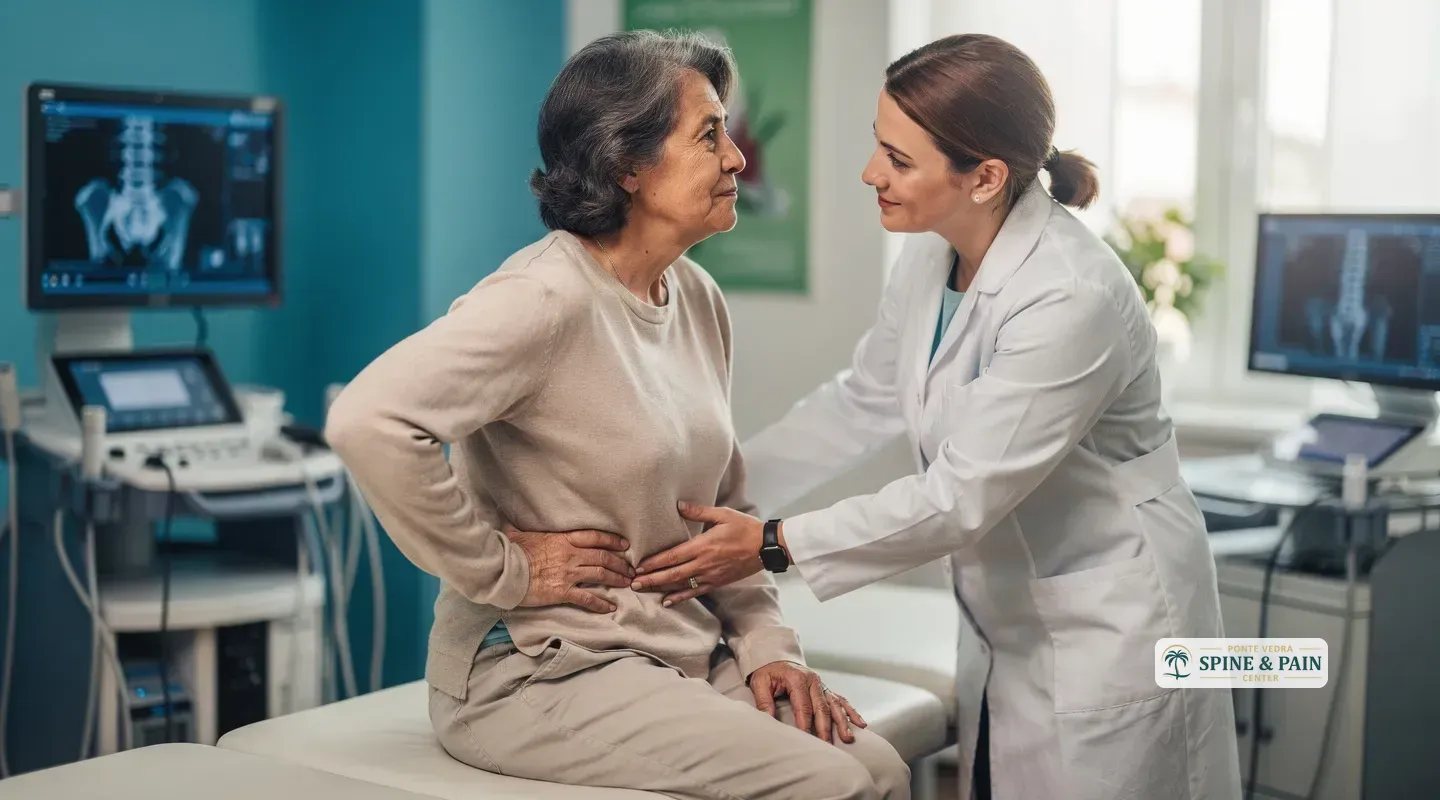
What can aching in the lower back and hips mean?
Aching in the lower back and hips can come from a nonspecific back problem, a nerve or spinal narrowing, a source outside the spine, or another specific spinal condition. Symptoms can help you organize what you feel, but they cannot confirm the cause by themselves.
Possible explanations include a muscle strain, ligament sprain, herniated disc, arthritis, sacroiliac joint dysfunction, spinal stenosis, sciatica, or a hip problem. Kidney, abdominal, reproductive, and other conditions can also cause pain in the lower back or hip area. That range is why a familiar ache should not automatically be labeled as a disc problem or sciatica.
Acute low back pain can mean six to 12 weeks of pain between the lower ribs and buttocks, and it may travel down one or both legs as sciatica. Lower-back and hip aching can also last longer, recur, or change as you move. A pattern is a clue, not a diagnosis.
One primary-care source reported that 80 percent of patients with back pain had one or more red flags, although they rarely had a serious condition. That finding does not mean you should dismiss warning signs. It means a clinician needs to interpret the full history and examination rather than rely on a single symptom.
Start by asking three practical questions: Where did the pain begin? Where does it travel? What changes it? Your answers can help you decide whether to monitor general symptoms, arrange a qualified evaluation, or seek immediate help.
Where does the pain start and where does it travel?
Pain location and travel can offer useful clues, although location alone cannot identify the source. Pain near the front of the hip, thigh, or groin often follows a hip-joint pattern. Pain near the back of the hip or buttock can come from the back, including a pinched nerve.
Movement may add another clue:
- Pain with bending can point toward the back.
- Trouble getting out of a car or pain that increases with weight-bearing can point toward the hip.
- Pain with walking, pivoting, or rotating the hip may make hip involvement worth discussing.
- Pain that starts in the lower back and travels into the buttock or leg may suggest a spine-related source.
Front-of-hip or groin pain that travels down the thigh toward the knee is more suggestive of a hip pattern. Pain in the back of the hip or buttock that travels down the hamstring toward the calf is more suggestive of a spine pattern. These patterns are not a diagnosis, and hip and spine problems can occur together.
Hip pain may feel dull or sharp and may occur in the groin, thigh, or buttocks. Stiffness or reduced hip motion may stand out in the morning or after you sit for a long time. A lower-back pattern may change with bending, sitting, standing, or walking, but no single movement proves where the pain began.
Chronic lower back pain affects up to 23% of adults worldwide. That figure measures a worldwide adult population, not the cause of your symptoms and not your personal likelihood of having a particular condition. Use the pattern to describe your experience, then let a qualified evaluation sort through overlapping possibilities.

How can muscle, joint, or nonspinal pain fit the pattern?
Muscle, ligament, joint, and nonspinal conditions can all create aching around the lower back and hips. A strain is an overstretched or torn muscle, while a sprain involves a torn ligament. Lumbar strains and sprains are usually linked to an acute injury or gradual wear of the affected structure.
Pain felt near the back or hip may also be referred from spinal structures. Referred pain means you feel discomfort away from the structure producing it. Discs, facet joints, and sacroiliac joints are among the spinal sources described in clinical literature. Lumbar facet-joint pain may spread toward the area between the hip and thigh; an upper facet-joint problem may refer pain toward the flank, hip, or outer thigh, while a lower facet-joint problem may refer pain toward the back of the thigh.
Other possible back-pain patterns include muscle spasm, a herniated disc, spinal stenosis, spinal curvature, or strain and tears in the muscles or ligaments supporting the back. Arthritic conditions, including osteoarthritis, psoriatic arthritis, and rheumatoid arthritis, can contribute to lower-back or pelvic pain.
Pain outside the spine can matter as well. Kidney infection or kidney stones, gallbladder or pancreatic problems, pregnancy-related problems, and conditions affecting female reproductive organs can cause pain in the lower back or hip area.
You do not need to sort these categories out alone from a symptom list. Note what you feel, what else is happening in your body, and whether the pattern is changing. Seek qualified medical guidance when the source remains unclear, symptoms persist, or warning signs appear.
What pattern suggests nerve-related pain or sciatica?
Nerve-related pain often travels away from the lower back through the buttock and into the leg. Sciatica typically follows that path and may feel burning or tingling; numbness can occur as well. Nerve-root pain may continue down the back of the leg to below the knee, and the affected leg may feel weak or less reliable.
Radiculopathy, often called a pinched nerve, occurs when a spinal nerve root is compressed. The pattern depends on which nerve root is affected, so symptoms can include pain, weakness, numbness, or tingling in different locations. Lumbosacral radiculopathy usually results from pressure on lumbar nerve roots. Disc herniation, bone spurs, and spinal stenosis are common causes.
Coughing or straining may worsen some nerve-root symptoms associated with disc herniation, but that response is not enough to establish a diagnosis. Similarly, pain below the knee can support a nerve-related pattern without proving that a disc or spinal narrowing is responsible.
Radiculopathy affects approximately 3–5% of the general population. That percentage refers to the general population in the cited source, not to adults in Ponte Vedra Beach or to your individual risk. Lumbar radiculopathy is often called sciatica, but the terms describe a pattern and a nerve-root problem rather than one single cause.
Arrange an evaluation when radiating pain is persistent, worsening, or accompanied by weakness or numbness. Seek immediate qualified help if the neurological changes are major or progressing, or if bladder, bowel, walking, or balance changes appear.
Why can hip and spine symptoms be hard to separate?
Hip and lumbar-spine symptoms can overlap because both regions may produce pain in the low back, buttock, groin, thigh, or sometimes the knee. Pain location alone can mislead, so a front-of-hip ache does not rule out a back problem, and buttock pain does not prove that the spine is responsible.
Hip and spine problems can also occur at the same time. In that situation, treating or identifying one region may not explain every symptom.
A useful comparison is not a self-diagnosis. Instead, describe whether the pain is centered in the groin or back of the hip, whether it travels, and which movements bring it on. Include trouble with standing, sitting, rising from a chair, walking, pivoting, or crossing your legs. Those details give a clinician more than a label such as hip pain or back pain.
Do not use it to delay urgent assessment or to decide your own eligibility.
When symptoms overlap, choose evaluation over repeated guesswork. A structured history and examination can determine whether the next question concerns the hip, spine, nerves, or another source.
What should you track before deciding what to do next?
A pain log can turn a vague ache into useful information for an evaluation. A history and physical examination are essential when acute low back pain is assessed, and a clinician will want to know whether the episode is new or recurrent.
Track these details in plain language:
- Onset: Write when the pain began and what you were doing at the time.
- Location: Mark the lower back, groin, outer hip, buttock, thigh, or leg rather than using only the word hip.
- Travel: Note whether pain stays in one place or moves below the knee.
- Quality: Describe an ache, pressure, sharp sensation, burning, tingling, or numbness.
- Timing: Record whether symptoms are constant, intermittent, worse in the morning, or disruptive at night.
- Triggers: Note standing, sitting, rising from a chair, bending, extending your trunk, pivoting, or crossing your legs.
- Function: Record changes in walking, balance, strength, sleep, work, or ordinary activities.
- History: Include previous episodes, injuries, medical conditions, and treatments you have already tried.
The goal is not to score your pain perfectly. The goal is to show how the pattern behaves. A symptom that appears only with hip rotation tells a different story from pain that travels below the knee with numbness, even though both may begin near the same area.
Bring the log, a list of prior treatments, and any questions to a qualified evaluation. If symptoms change quickly, update the description rather than relying on an earlier label.

What can you do first when no warning signs are present?
General self-care for nonspecific acute low-back aching starts with staying active within your tolerance while avoiding movements that clearly worsen symptoms. Activity modification can mean changing how you sit, lift, exercise, or walk rather than stopping movement altogether.
A practical first approach is:
- Keep ordinary, comfortable movement in your day instead of remaining in bed.
- Reduce or change the activity that sharply increases your symptoms.
- Shift positions regularly if sitting or standing in one position aggravates the ache.
- Monitor whether pain is improving, staying the same, spreading, or affecting strength and walking.
- Arrange a qualified evaluation if the pattern remains unclear, keeps returning, or limits normal activities.
Prolonged bed rest is not recommended for acute nonspecific low-back pain and may worsen symptoms. That does not mean you should push through severe pain or ignore neurological changes. It means extended inactivity is not a substitute for assessment or a reason to avoid all movement.
General guidance applies only when warning signs are absent and the symptoms remain manageable. Do not use self-care to explain away fever, significant trauma, worsening weakness or numbness, bladder or bowel changes, or pain that prevents you from getting comfortable. Those patterns change the next step from monitoring to qualified medical attention.
What happens during an evaluation of lower-back and hip aching?
A lower-back and hip evaluation starts with your history and a physical examination before imaging or other testing is chosen. At a first pain management visit, your clinician may discuss your symptoms and daily activities, review your health history, and check strength, movement, reflexes, flexibility, and tender areas.
The examination may include your back and hip rather than focusing only on the place that hurts most. A clinician may assess posture, walking, balance, range of motion, tenderness, strength, reflexes, sensation, nerve tension, hip movement, and selected hip tests. These findings can help distinguish a hip-joint problem, nerve irritation, or another spine-related cause.
A published cohort included 101 consecutive patients with low-back pain. In that group, 80% had at least one positive provocative hip test; pain with pivoting was reported by 72%, and pain with crossing the legs by 48%. The figures measure that specific study group and those reported activities. They do not mean that a positive hip test proves your pain comes from the hip.
When hip and lumbar-spine problems may overlap, a thorough history and examination can be followed by imaging or diagnostic injections if the clinician believes those steps will clarify the primary problem or treatment sequence. The purpose is to connect the findings with your symptoms, not to treat an image in isolation.
Bring your pain timeline, activity triggers, prior treatments, and changes in function. Those details help the evaluation address the pattern you actually experience.
When might imaging or other testing enter the process?
Imaging and other tests fit the suspected pattern rather than every episode of lower-back or hip aching. When an examination suggests radiculopathy, spinal stenosis, or another specific spinal cause, MRI or CT may help establish the diagnosis and guide management.
Different tests answer different questions. Depending on the suspected diagnosis, X-rays can show arthritis, alignment problems, or bone changes. MRI can assess discs, nerves, soft tissues, and joint structures. A clinician may also consider other testing when symptoms suggest a nonspinal source or a serious condition.
When there are no findings suggesting a serious problem, a clinician may not recommend immediate imaging or laboratory testing for acute low-back pain. That recommendation applies to nonspecific pain without warning signs; it does not apply when the examination raises concern for fracture, infection, cancer, severe nerve compromise, or another urgent problem.
An abnormal scan does not automatically identify the structure causing pain. Imaging findings need to match your history, examination, and symptom pattern. Ask what clinical question a test is meant to answer and how the result would change the next step. Some imaging abnormalities also appear in people without symptoms, so a scan can describe a structure without proving it is the source of your pain.
Do not seek repeated imaging simply because pain is uncomfortable, and do not postpone urgent assessment while waiting for a routine scan. The examination determines which boundary applies.
Which symptoms require immediate qualified help?
- New loss of bladder or bowel control, difficulty urinating, urinary retention, or fecal incontinence.
- Numbness in the saddle or perineal area, progressive leg weakness, or a new walking problem.
- Severe or escalating pain that will not let you get comfortable, pain after significant trauma, or new difficulty walking or balancing.
- Fever of 38 °C or higher, especially with immunosuppression, intravenous drug use, or a recent urinary tract or skin infection.
- Unexplained weight loss, pain that wakes you at night or is worse when lying down, or a history of cancer.
These findings can raise concern for spinal infection, fracture, malignancy, or severe nerve compression. You do not need to determine which condition is present before seeking help. Increasing loss of motor or sensory function, increasing pain, or loss of bladder or bowel function requires immediate qualified evaluation.
One source reported that about 60 percent of patients with low-back pain improved within seven days with conservative therapy, and most improved within four weeks. That figure describes reported improvement in that study group; it is not a reason to wait when warning signs appear. A common course and an urgent symptom can exist in the same body, so triage comes first.
If a new severe symptom is present, do not drive yourself if you are unsafe to do so. Use the urgent medical pathway available to you rather than waiting for a routine pain-management visit.

When should you arrange a qualified evaluation?
Persistent or recurrent aching deserves a qualified evaluation when the pattern remains unclear, limits your activities, or changes despite reasonable monitoring. Arrange medical care for new or worsening numbness, tingling, weakness, or pain, and arrange an evaluation when back pain has lasted longer than four weeks.
A nonspecific or mechanical low-back diagnosis should be made only after serious causes have been considered through a thorough history and physical examination. If you have no urgent warning signs, that evaluation can usually focus on organizing the pain pattern, examining the back and hip, and deciding whether testing is useful.
Nonspecific lumbosacral sprains are typically self-limited, with 90% resolving within four to six weeks. That figure measures the course described for lumbosacral sprains, not every cause of lower-back and hip aching. If your pain has not improved after about one month, or if it is worsening sooner, arrange further evaluation rather than assuming it is a simple sprain.
Bring the information from your pain log: when the ache began, whether it is a first or recurrent episode, where it travels, what it feels like, which movements change it, and what treatments you have already tried. Mention changes in strength, sensation, sleep, walking, balance, bladder function, or bowel function even if they seem unrelated.
Use immediate care for warning signs. Use a scheduled evaluation for persistent, recurrent, limiting, or uncertain symptoms that do not require an urgent pathway.
Choose a local evaluation when the pattern remains unclear
A local evaluation can help you organize lower-back and hip aching when the pattern remains unclear and no symptom requires immediate urgent care. For adults in Ponte Vedra Beach, Jacksonville Beaches, Nocatee, and St. Johns County, Ponte Vedra Spine & Pain Center treats lower back pain and sciatica. Dr. Eli Loch is double board-certified in anesthesiology and pain medicine by the American Board of Anesthesiology.
Bring your symptom timeline, pain locations, travel pattern, triggers, prior episodes, previous treatments, and any changes in strength, sensation, walking, or balance. A qualified healthcare professional decides which evaluation or treatment is suitable for your circumstances. An appointment request is not a substitute for urgent medical help when warning signs are present.
Questions to consider before requesting an evaluation
Can lower back pain radiate into only one hip?
Yes. Irritation of a nerve or joint on one side of the lower spine can send pain into one hip, buttock, or leg. This pattern can occur with a herniated disc, sciatica, spinal stenosis, or facet-joint irritation, but an examination is needed to identify the source.
Does aching in the lower back and hips always mean sciatica?
No. Sciatica usually travels from the lower back through the buttock and down the leg, often with burning, tingling, numbness, or weakness. Muscle strain, arthritis, facet or sacroiliac-joint pain, hip problems, and nonspinal conditions can cause similar aching, so symptoms alone can’t confirm sciatica.
Does groin pain always come from the hip?
No. Pain in the groin or front of the hip often follows a hip-joint pattern, but hip and lumbar-spine problems can occur together. A clinician may compare your pain location, movement triggers, strength, sensation, hip motion, and back findings before deciding whether further testing is useful.
Living with this?
We treat this in Ponte Vedra Beach.
Dr. Eli Loch, D.O. — double board-certified in anesthesiology and pain medicine. Reading about it only goes so far; a diagnosis tells you which of these actually applies to you.